Weekend Road Trip Checklist: What to Check Before You Drive
Weekend Road Trip Checklist: What to Check Before You Drive
Weekend Road Trip Checklist: What to Check Before You Drive
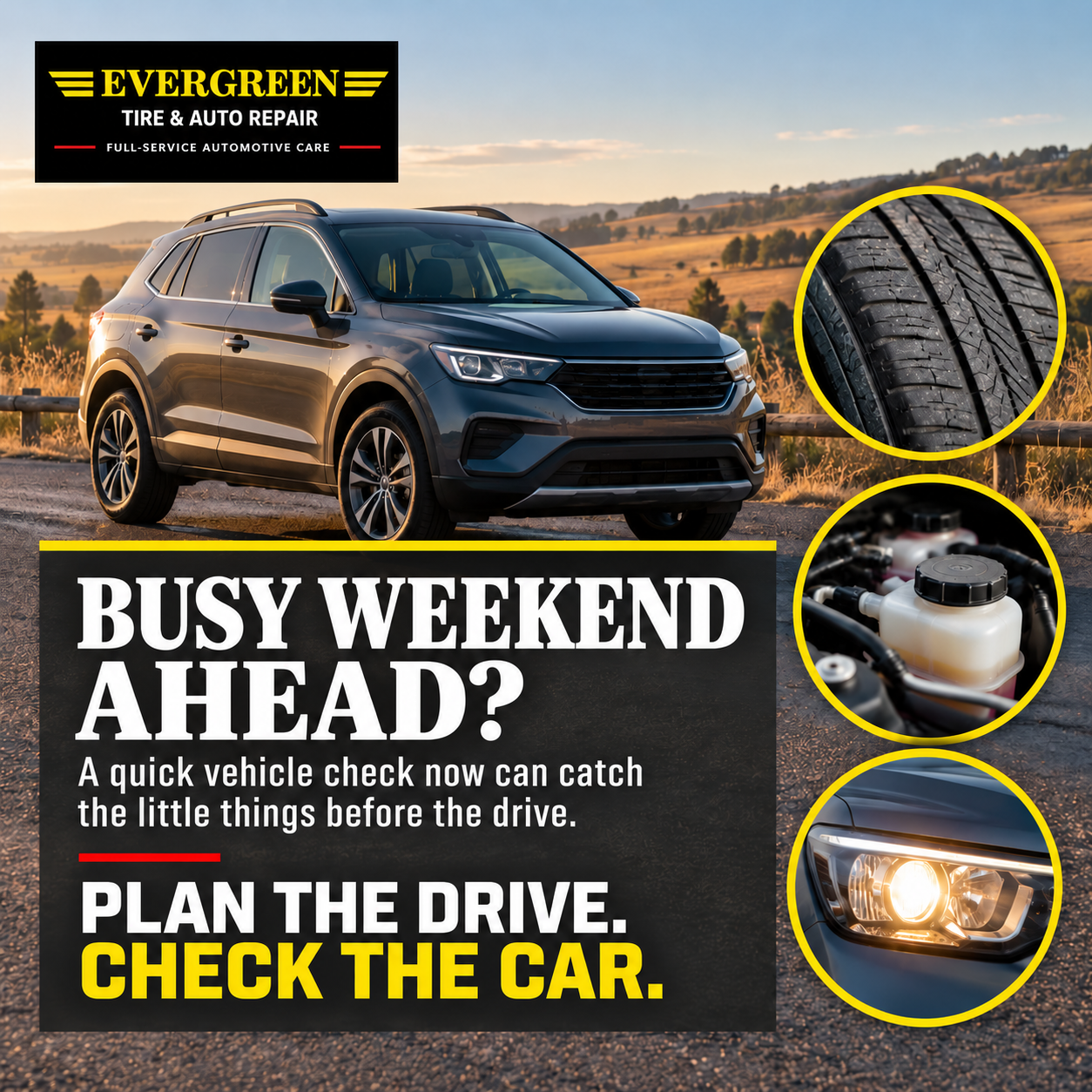
Before a weekend road trip, check your tire pressure and tread, pay attention to brake performance, review fluid levels, and make sure your headlights, signals, and wipers work. Notice starting problems and bring basic roadside supplies. If something affects braking, steering, visibility, or engine operation, have the concern inspected before traveling rather than hoping it can wait.
Whether you're heading out of Pullman for the afternoon or packing for a full weekend away, vehicle preparation deserves a place alongside your travel plans.
At Evergreen Tire & Auto Repair, we help Palouse-area drivers care for their vehicles through scheduled maintenance services in Pullman, tire service, and automotive repairs.
A quick check doesn't replace the manufacturer's maintenance schedule or a professional inspection. It can, however, help you notice conditions that should be addressed before adding more miles.
What Should You Check Before a Weekend Road Trip?
You don't need to become a mechanic to recognize some important warning signs. Start with the items that affect traction, stopping, visibility, and dependable operation.
1. Check Tire Pressure, Tread, and Condition
Tires are a smart place to begin because they influence traction, steering response, braking, and ride quality.
Check all four tires for uneven wear, cuts, bulges, embedded objects, and obvious damage. Check the spare tire if your vehicle has one.
Measure inflation pressure when the tires are cold, following the vehicle manufacturer's recommended setting on the driver's door placard or in the owner's manual. The maximum pressure molded into a tire's sidewall is not the vehicle's normal inflation recommendation.
Pay attention to tread depth, too. The National Highway Traffic Safety Administration (NHTSA) identifies 2/32 inch as a replacement threshold, although wet-weather performance can become less effective before a tire reaches that minimum.
If you notice unusual wear or are unsure about tread condition, Evergreen's complete tire service guide explains how inflation, alignment, rotation, and inspection relate to tire performance.
A professional tire inspection may identify wear patterns or damage that are not obvious during a quick walkaround.
2. Pay Attention to Brake Performance
Your vehicle's brakes should respond predictably and consistently.
Before your trip, think about how the brakes have behaved during recent drives. Have you noticed squealing, grinding, unusual vibration, a soft pedal, or a change in stopping distance?
These symptoms can have different causes. Noise may be associated with worn friction materials or hardware. Vibration can involve brake components or other wheel-end issues. A soft or sinking pedal may indicate a hydraulic-system problem.
A professional inspection can help identify the underlying concern.
If braking feels significantly weaker than normal, the pedal suddenly sinks, or a red brake-system warning appears with poor braking performance, do not continue driving. Stop safely and arrange professional assistance.
3. Review Fluids and Look for Leaks
Engine oil, coolant, brake fluid, and other vehicle fluids each have specific jobs.
Before traveling, review your maintenance history and check accessible fluid levels according to the owner's manual. Depending on the vehicle, this may include:
- Engine oil
- Engine coolant
- Brake fluid
- Windshield washer fluid
- Other applicable service fluids
Not every vehicle has a conventional dipstick, and not every fluid reservoir is intended for routine owner servicing. Follow manufacturer instructions, and never remove a pressurized cooling-system cap while the engine is hot.
Also look for fresh fluid collecting beneath the vehicle. Water dripping from an air-conditioning system may be normal, while oil, coolant, brake fluid, and other leaks deserve evaluation.
A low fluid level is not always solved by adding more fluid. Brake-fluid changes, for example, may reflect component wear or leakage. The cause should be understood before a recommendation is made.
4. Test Headlights, Signals, and Wipers
Good visibility matters whether you're leaving before sunrise, returning after dark, or encountering rain along the way.
Walk around the vehicle and verify that the headlights, taillights, brake lights, turn signals, and hazard flashers work.
Inspect the windshield wipers for damaged rubber, streaking, skipping, or missed areas. Confirm that the washer system operates and contains appropriate fluid.
Keep the windshield, mirrors, camera lenses, and exterior lights clean.
On a road trip, especially one involving unfamiliar roads, working lights and a clear windshield are basic safety necessities.
5. Notice Battery and Starting Problems
Battery or charging-system trouble can interrupt an otherwise ordinary trip.
Warning signs may include slower-than-normal engine cranking, repeated difficulty starting, unusual electrical behavior, or a battery/charging warning light.
Look for obvious corrosion or damage around accessible battery components without handling or disconnecting them.
If the vehicle has been struggling to start, testing the battery and charging system before departure can help determine whether service is appropriate.
A battery that started the vehicle successfully this morning is not guaranteed to perform the same way throughout a weekend of travel.
6. Prepare Your Spare Tire and Roadside Supplies
Battery or charging-system trouble can interrupt an otherwise ordinary trip.
Warning signs may include slower-than-normal engine cranking, repeated difficulty starting, unusual electrical behavior, or a battery/charging warning light.
Look for obvious corrosion or damage around accessible battery components without handling or disconnecting them.
If the vehicle has been struggling to start, testing the battery and charging system before departure can help determine whether service is appropriate.
A battery that started the vehicle successfully this morning is not guaranteed to perform the same way throughout a weekend of travel.
Why Brake Symptoms Can Have More Than One Cause
1. Friction-Component Wear
Disc-brake pads press against rotors, while many drum-brake systems use shoes against drums. These friction components wear with use, but there is no universal mileage at which every vehicle needs the same brake work.
Vehicle design, load, route, driving habits, component materials, and existing condition all affect wear. Manufacturer guidance and actual measurements are more reliable than a generic mileage estimate.
2. Hydraulic-System Concerns
Brake fluid transfers force through the hydraulic system. Fluid condition, leaks, air, hoses, lines, the master cylinder, and other hydraulic components can affect pedal feel and braking response.
Brake-fluid type and service intervals are vehicle-specific. Follow the owner’s manual rather than adding fluid or selecting a replacement product by appearance alone.
3. Caliper, Hardware, Wheel, or Suspension Concerns
Calipers, slides, mounting hardware, wheel bearings, tires, and suspension components can influence brake noise, heat, pulling, vibration, or uneven wear.
At Evergreen, the useful question is not simply, “Do the pads look worn?” It is, “Which condition explains the customer’s symptom, and what do the measurements show?” Looking at the braking system as a whole helps produce a more relevant recommendation.
What Happens During a Brake Inspection
1. Confirming the Symptom
The process begins with the driver’s description. Note when the symptom occurs, whether the vehicle is cold or warm, which speed range makes it noticeable, whether a warning light is on, and whether the condition appeared suddenly.
When the vehicle can be operated safely, confirming the symptom may help distinguish a wheel-end noise from a hydraulic or chassis concern.
2. Inspecting and Measuring Components
Evergreen’s live brake-service page describes checking brake pads, rotors, calipers, and fluid before reviewing the findings with the customer. A broader inspection may also include brake lines, hoses, hardware, leaks, warning lights, and vehicle-specific electronic information when relevant.
Component measurements matter. Pad thickness, rotor or drum condition, wear patterns, fluid condition, and visible damage provide a stronger basis for recommendations than sound alone.
Brake checks can also be included as part of preventive care. Evergreen’s scheduled maintenance guide for Pullman drivers identifies brake inspection as a regular maintenance consideration.
3. Explaining Findings and Next Steps
After inspection, the shop should explain:
- What was found
- Which measurements or observations support the finding
- What needs prompt attention
- What can be monitored
- Which repairs require customer authorization
- Whether vehicle-specific maintenance guidance applies
Brake pads are only one part of the system. Recommendations should reflect the condition of the related components rather than automatically replacing every available part.
When to Stop Driving and When to Schedule Promptly
Stop driving and arrange towing or roadside assistance when the brake pedal drops toward the floor, stopping ability is substantially reduced, a fluid leak is visible, or a red brake warning light appears with changed pedal feel or poor braking.
Schedule an inspection promptly when braking remains normal but you hear recurring squealing, notice mild vibration, experience pulling, or see uneven brake wear. A condition that becomes suddenly worse should be treated more urgently.
An online description cannot determine whether a particular vehicle remains safe to drive. When uncertain, protecting yourself and other road users is more important than completing the trip.
Brake Care for Pullman and Palouse Driving
Pullman-area driving can combine short trips, frequent stops, grades, highway travel, dust, moisture, and seasonal weather. These conditions do not create one universal brake-service interval, but they make it useful to notice changes in sound, pedal feel, and stopping response.
Ask for a brake inspection when a symptom begins instead of waiting for several warning signs to appear at once. During routine tire or maintenance visits, reviewing visible brake condition may also help identify wear before it changes how the vehicle stops.
Brake Warning Sign FAQs
1. How often should brakes be inspected?
Follow the maintenance information for your vehicle and request an inspection whenever braking sound, pedal feel, warning lights, or stopping performance changes. Brake condition can also be checked during appropriate routine service.
2. Can I keep driving when my brakes squeal?
An occasional sound may have several causes, but persistent squealing should be inspected. Stop driving when the noise becomes grinding or is accompanied by reduced braking, a soft pedal, or another serious symptom.
3. Does the brake warning light always mean worn pads?
No. Depending on the vehicle, it may relate to the parking brake, fluid level, hydraulic system, or another monitored condition. Check the owner’s manual and have a persistent light properly diagnosed.
4. Why does my steering wheel shake when braking?
Brake rotor condition is one possibility, but wheel, tire, steering, suspension, and hardware concerns can cause similar vibration. Inspection and measurements are needed before selecting a repair.
5. Does a brake inspection automatically mean repairs will be performed?
No. An inspection should identify the condition and support a recommendation. Repairs should proceed only after the customer reviews and authorizes the work.
Schedule a Brake Inspection in Pullman
A new noise, pedal change, warning light, or loss of stopping performance is a reason to have the system checked—not a reason to guess which part has failed.
Contact Evergreen Auto Repair & Tires, 300 NE Stadium Way in Pullman, call 509-332-7551 or book online here. You may also request a brake-service estimate online.
Evergreen serves Pullman, Moscow, Colfax, Albion, Palouse, and nearby communities with full-service automotive repair and tires. Qualifying repairs may be covered by a 3-year/36,000-mile warranty, subject to applicable terms and conditions.
Written by Evergreen Auto Repair & Tires